From the deep financial crisis into which Germany's economy fell after the end of World War I, the country was brought back on track by Reich Minister Hjalmar Schacht, who played an active role in developing the Third Reich’s economy until 1942. The new currencies introduced by Schacht in 1923–1924 — the Rentenmark and the Reichsmark — ended the rampant inflation that had plagued Germany in the early 1920s. They remained officially in circulation until 1948 and were used in practice until 1949.
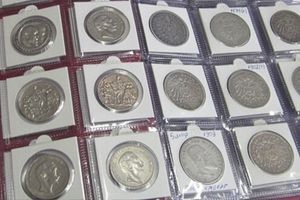
With Adolf Hitler’s rise to power, regular-issue coins remained unchanged in appearance until 1936. Only from 1936 onwards did coins begin to be minted with new Nazi symbols. The coat of arms of the Weimar Republic was replaced by the swastika — a symbol chosen by the National Socialists as the emblem of their movement. The only coin whose design remained unchanged until the end of its circulation was the 1 Mark coin, though under the Nazis it began to be minted from nickel.
The first regular-issue coins to feature the new symbols were pfennigs: in 1936, the first batches of 1, 2, 5, and 10 pfennig coins with swastikas were minted. In 1938, new 50 pfennig coins were released. Also in 1936, the design was changed on 2 and 5 Mark coins featuring Hindenburg’s portrait — the previous emblem was replaced with a swastika.
By 1939, due to the outbreak of World War II, the production of coins from traditional materials ceased, and coins made from cheaper and more available alloys — zinc and aluminum — entered circulation. Coins made from other, more valuable metals were withdrawn from circulation and melted down when possible, making them rarer today. In 1941, coins made of precious metals were completely removed from circulation and ceased to be legal tender.
During the Third Reich, commemorative coins were also issued, though the list of them was not large. See the article "Commemorative Coins of the Third Reich."